Audience and market insight diagram on an office wall

Marketing Communications Strategy

Competitor & Audience Insights

Understand your market, your audiences, and the conversations shaping your reputation.

Sudace uses data-driven research to help organizations understand their competitive environment, audience behaviour, and business reputation. Our Competitor & Audience Insights service combines market analysis, media scanning, social listening, and sentiment analysis to reveal the patterns and questions that should inform communication decisions.

AI tools and specialist Insights platforms support the collection, organization, and analysis of relevant information. Our team interprets the findings in context and translates them into recommendations for communications strategy, practical solutions, and planning. For brands in Saudi Arabia, we run competitor analysis and market research from our Riyadh office.

Make insight useful to your next decision

Research becomes valuable when it helps your team make a better decision. We connect market developments, competitor activity, audience behaviour, and reputation signals to explain what the findings mean for your brand and what should happen next.

01

See the competitive context

Understand market developments, category conversations, and the promises audiences encounter. Examine competitor positioning and communication to identify patterns, unmet information needs, and opportunities relevant to your own brand.

02

Understand audience behaviour

Explore how people seek information, compare options, express concerns, and respond to communication. Connect behavioural patterns with motivations, decision barriers, and the information audiences need at each stage.

03

Identify relevant opportunities

Turn findings into priorities for positioning, messaging, content, and engagement. Identify where clearer explanations, stronger evidence, or a different communication approach could address concerns and support audience confidence.

AI-assisted research with strategic interpretation

We use AI tools and specialist Insights platforms to support research, organize information, cluster conversation themes, and identify patterns for closer review. Our team checks significant findings against the available sources and considers language, context, and gaps in coverage before drawing strategic conclusions.

What our competitor and audience Insights service covers

We define the research scope around your objectives, priority audiences, and available information. The aim is to answer a focused set of questions with enough depth to support practical decisions.

  1. 01

    Competitor communication benchmarking

    Review selected competitors and relevant alternatives across their public communication. Examine positioning, value propositions, messaging, content themes, channel activity, and calls to action using a consistent comparison framework.

  2. 02

    Market analysis and category intelligence

    Examine relevant market developments, category trends, demand signals, and emerging conversations using available evidence. Identify changes that may affect audience expectations, competitive relevance, and the communication choices your organization needs to make.

  3. 03

    Audience behaviour and decision barriers

    Analyze available search, website, engagement, customer feedback, and research data to understand how audiences seek information and make choices. Identify recurring needs, motivations, questions, and barriers, distinguishing observed behaviour from assumptions.

  4. 04

    Audience segmentation and profiles

    Group audiences around meaningful differences in needs, behaviour, or decision roles. Develop practical profiles that help teams make communication choices, with assumptions and evidence gaps clearly identified.

  5. 05

    Decision journeys and touchpoints

    Map how audiences become aware, seek information, compare options, and take action. Identify moments where communication can improve understanding, answer a concern, or support a useful next step.

  6. 06

    Media scanning and social listening

    Review relevant news coverage, industry publications, and public online conversations. Identify recurring narratives, brand and competitor mentions, emerging issues, and communication opportunities across the agreed sources and period.

  7. 07

    Sentiment and business reputation

    Assess the tone, themes, and drivers of conversation about your brand and category. Identify recurring concerns, positive associations, trust factors, and potential reputation issues, with language and context reviewed by our team.

  8. 08

    Implications for brand communication

    Connect market, competitor, audience, and reputation findings with strategic recommendations. Prioritize the communication challenges to address, the solutions to develop, and the planning decisions that need further evidence or testing.

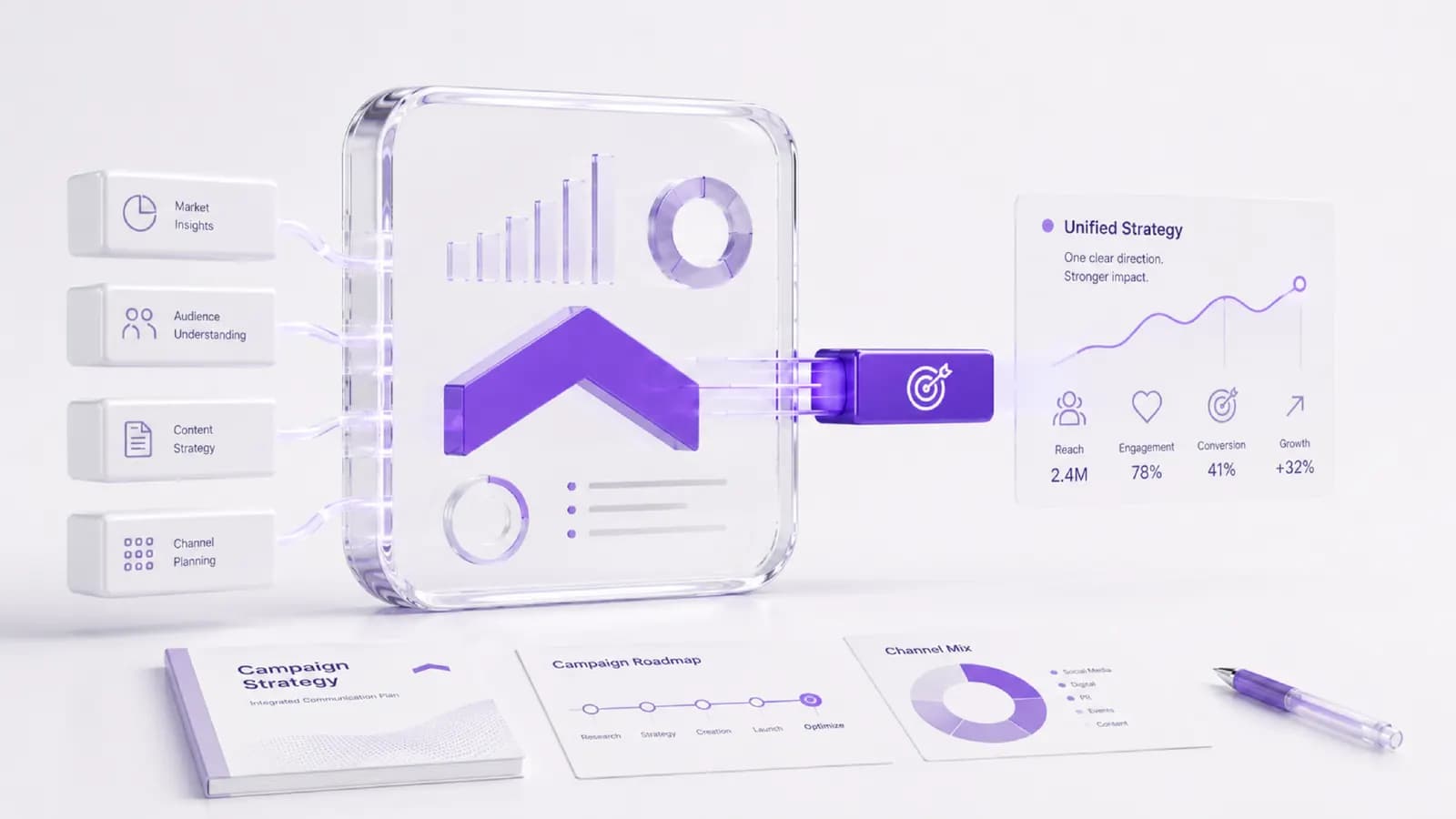
A clear process from question to recommendation

Our approach keeps the research connected to its purpose. We agree the questions, sources, and depth of analysis before the work begins, then develop findings into an accessible reference for your team.

  1. 01

    Discover

    Define the decisions to support, research questions, audiences, competitors, sources, and relevant market context.

  2. 02

    Analyze

    Use AI tools and Insights platforms to organize data, scan media, examine audience behaviour, and assess conversation themes and sentiment.

  3. 03

    Understand

    Review findings in context, validate significant patterns, and identify the needs, reputation issues, and communication gaps that matter.

  4. 04

    Strategize

    Translate the insights into recommendations for communication strategy, messaging, channel priorities, and practical solutions.

  5. 05

    Activate

    Equip your team with audience profiles, strategic briefs, and prioritized planning recommendations for applying the findings.

  6. 06

    Amplify

    Define what to track, test, or revisit as audience behaviour, media narratives, and market conditions evolve.

Sources may include market reports, public media, online conversations, customer feedback, website analytics, existing research, and stakeholder discussions. We agree coverage, access, and research methods around the brief; interviews, surveys, and ongoing monitoring are scoped where needed.

Findings your team can work with

We present the research so that decision-makers can understand its relevance without having to work through every source. The final outputs reflect your brief and distinguish observed evidence, interpretation, and recommended action.

Insight dashboards and reports
  1. 01

    Research framework

    The questions, comparison criteria, sources, and scope that guide the assignment.

  2. 02

    Market and competitor Insights

    Relevant developments, category patterns, and a structured comparison of selected brands and their communication.

  3. 03

    Audience behaviour profiles

    Needs, motivations, decision barriers, information habits, and relevant journey touchpoints.

  4. 04

    Sentiment and reputation assessment

    Conversation themes, media narratives, trust factors, and priority issues requiring attention.

  5. 05

    Insight and action report

    Validated findings, limitations, communication implications, recommended solutions, and priorities for strategy and planning.

Your research questions answered

How do you decide which competitors to review?

We select them around the decision you need to make. The review may include direct competitors, alternative solutions, or brands with relevant communication approaches. We agree the selection and comparison criteria with your team so the benchmark serves a clear purpose.

Can you use research and data we already have?

Yes. Existing studies, customer feedback, analytics, and internal knowledge can provide a valuable starting point. We assess their relevance and limitations, then identify the gaps that matter to your brief. This helps focus additional work where it can improve the decision.

What can sentiment analysis tell us about reputation?

Sentiment analysis helps identify expressed attitudes and recurring concerns in the sources reviewed. We assess context, language, and source coverage before drawing conclusions. Online conversations reflect the people participating; we consider them alongside other evidence when assessing business reputation.

Will the research include new interviews or surveys?

Where the brief requires direct audience evidence, we can define an appropriate research approach and the resources needed to deliver it. Research questions, participant criteria, methods, and reporting are agreed separately from a review based on existing information.

Start with the question that matters

Tell us which market, audience, or reputation question needs greater clarity. We will help turn relevant data into insights that guide your communication strategy, solutions, and next steps.

info@sudace.com+962 79 600 6212+962 6 551 4360