Clarify your position
Define your brand's value in relation to audience needs, market conditions, and competitor communication. Establish a credible position supported by what your organization can demonstrate and what audiences need to understand.

Marketing Communications Strategy
Give your brand direction. Give your communications purpose.
Sudace develops data-driven communications and brand strategies that support business decisions. We combine market analysis, audience behaviour, sentiment, and reputation insights with strategic thinking to define what your brand stands for, who it needs to reach, and how it should communicate.
Using AI tools and specialist Insights platforms alongside human analysis, we turn data into a practical communication direction. The findings inform positioning, communication solutions, messaging priorities, channel choices, and implementation planning. Our Riyadh team builds communications and brand strategies for organisations across Saudi Arabia.
A clear strategy gives your team an evidence-based foundation for deciding what to say, where to focus, and how to assess progress. We connect what the data reveals with the communication priorities your organization needs to address.
Define your brand's value in relation to audience needs, market conditions, and competitor communication. Establish a credible position supported by what your organization can demonstrate and what audiences need to understand.
Bring leadership, marketing, and commercial teams around shared objectives. Create a reference for briefs, decisions, and communication across the organization.
Prioritize audiences, messages, and touchpoints using relevant evidence. Give your team a clearer basis for choosing communication activities, allocating resources, and assessing their contribution to business objectives.
We bring together market research, audience behaviour, customer feedback, media scanning, and social listening to understand the environment around your brand. Sentiment analysis and reputation insights help identify how the organization is discussed, which concerns recur, and where communication needs greater clarity or stronger evidence.
AI and Insights tools help organize information, identify themes, and compare patterns across the agreed sources. Our team reviews the findings for context and relevance, then connects them with your business priorities. These insights guide the communication solutions we recommend, from refining positioning to addressing perception gaps and planning audience engagement.
We shape the scope around your business challenge, existing knowledge, and the decisions ahead. The following areas form the foundation of a focused strategy.
Translate organizational priorities into clear communication goals. Define what audiences need to understand, how perceptions should develop, and which actions communication should support.
Use market, competitor, and reputation insights to clarify what your brand should be known for. Connect the value proposition with audience expectations and evidence your organization can demonstrate.
Use audience behaviour and stakeholder insights to identify needs, motivations, trust factors, and decision barriers. Define who matters to your objectives, what influences their choices, and where communication can support their journey.
Translate recurring audience questions, sentiment themes, and perception gaps into communication priorities. Establish message direction that explains your value, addresses concerns, and supports a consistent brand narrative.
Define how your website, social channels, media, and direct engagement should work together. Give each touchpoint a role in helping audiences understand, consider, or act.
Set responsibilities, review principles, and indicators for awareness, understanding, sentiment, and relevant actions. Establish how audience feedback and changes in business reputation should inform strategic reviews and future communication decisions.
The Sudace approach connects discovery with decisions, implementation, and learning. Each stage builds on the previous one, with the depth of work shaped around your assignment.
Define the business challenge and review available research, audience data, media coverage, and existing communication.
Use AI-assisted analysis and Insights tools to examine market patterns, audience behaviour, sentiment, and reputation signals.
Interpret the findings in context to identify audience needs, perception gaps, communication barriers, and strategic opportunities.
Translate validated insights into positioning, communication objectives, tailored solutions, message direction, and a practical roadmap.
Turn the approved strategy into prioritized plans and briefs, with clear channel roles, responsibilities, and delivery requirements.
Define how performance, audience feedback, and reputation indicators will inform adjustments and future planning.
For strategy assignments, activation and evaluation are planned within the handover. Campaign delivery and ongoing management are scoped separately.
Your deliverables turn the strategic direction into practical guidance. We agree the final outputs around the scope, ensuring each one supports a decision or a next step.
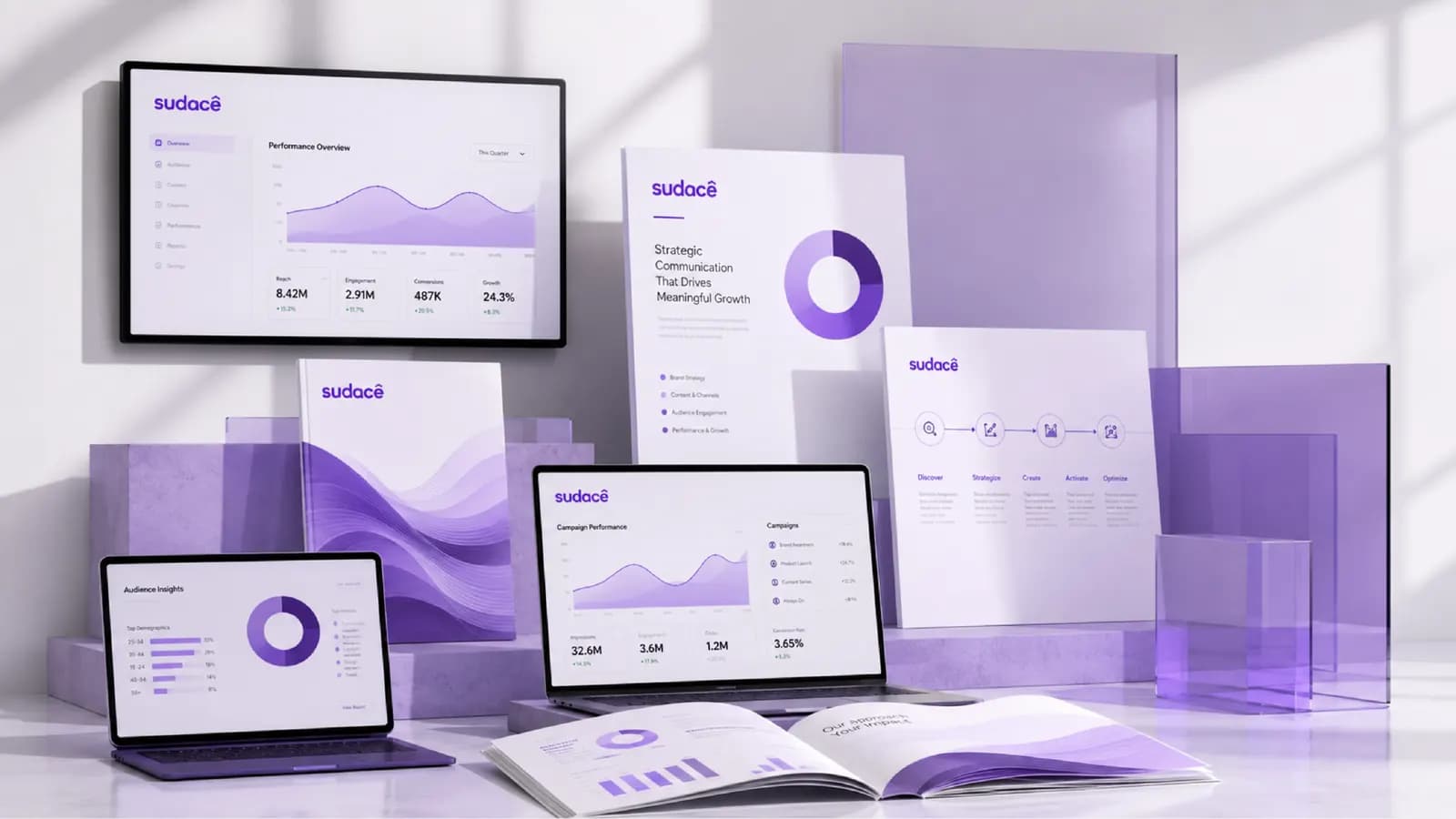
Market, audience, sentiment, and reputation findings connected to the communication challenge and priorities.
The intended brand position, value proposition, and supporting reasons to believe.
Audience priorities, objectives, themes, reputation considerations, and channel roles brought into one reference.
Prioritized communication solutions and activities, with responsibilities, dependencies, and proposed review points.
Relevant baselines, indicators, evidence needs, and practical direction for implementation and review.
Brand strategy defines your intended position, value, and relevance to an audience. Communications strategy translates that direction into objectives, messages, channel roles, and engagement priorities. We develop them together so your communication expresses a coherent brand position.
Yes. We review your plans, brand guidelines, research, customer feedback, and available performance data. We connect this knowledge with relevant market and media Insights to identify what remains useful and where additional analysis is needed.
The strategy provides direction for delivery. Detailed messaging development, campaign execution, media buying, social media communications, and content production can be scoped separately according to your needs.
We translate each significant finding into a decision: which audience to prioritize, what needs explaining, which perception to address, and where communication should take place. We then define objectives, messages, channel roles, and implementation priorities, creating a clear connection between the evidence and the recommended plan.
We begin with your objectives, communication challenge, and available information. We then define the scope, stakeholders, deliverables, and review stages. These requirements determine a practical project timeline.
Tell us what your organization needs to achieve and where communication is falling short. We will connect the relevant data and insights with a strategic direction and practical plan for your brand.